Newsletter Subscribe
Enter your email address below and subscribe to our newsletter
Enter your email address below and subscribe to our newsletter

 ByJohn A
Most homes end up with a prayer corner that never quite settles down as a permanent structure. The furniture moves around it, the wall behind it stays bare, and the piece itself looks temporary even after years. A mandir for the home is often bought as a standalone object, which explains why it sits apart from everything else in the room.
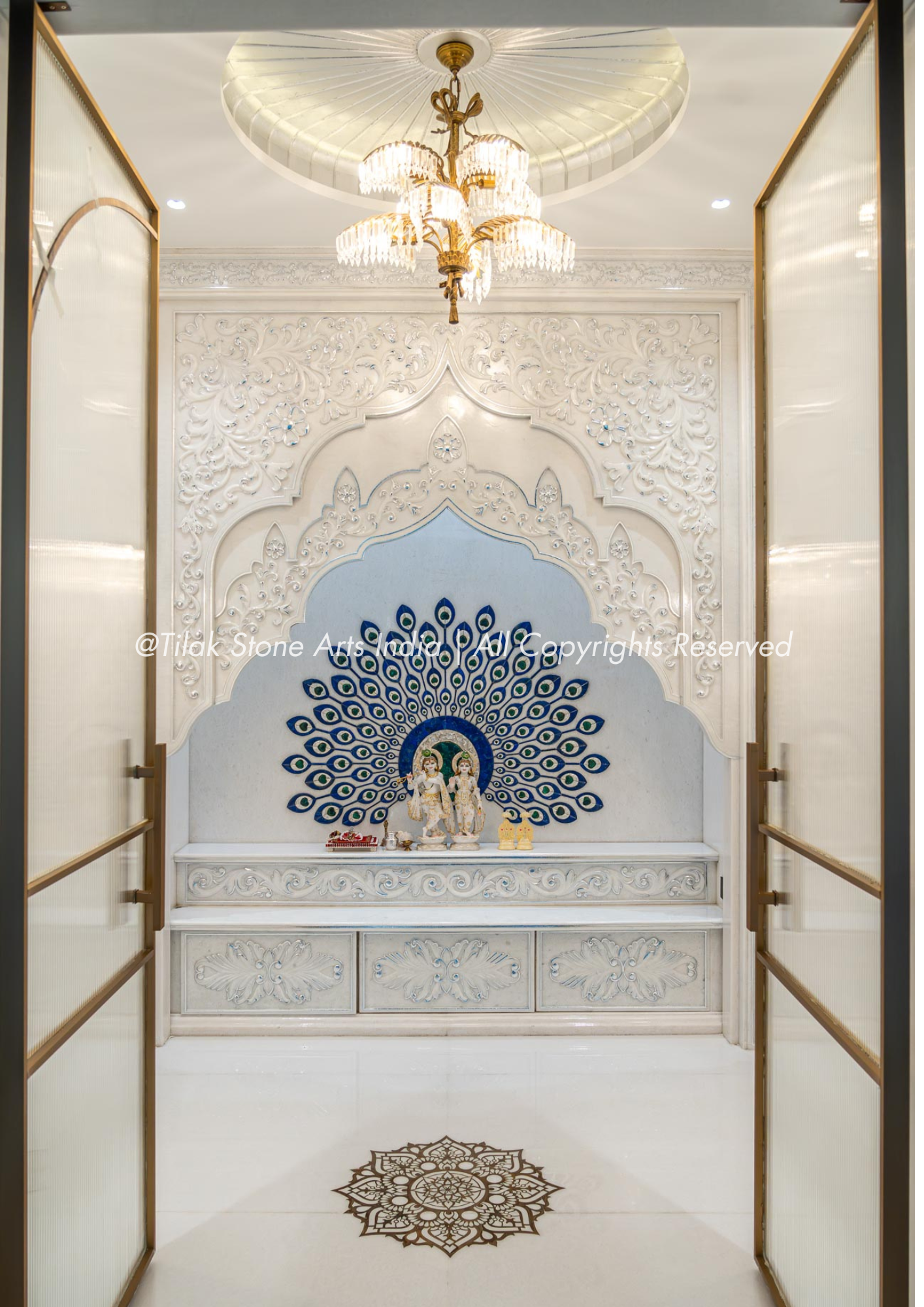
That distance closes once design decisions are made in the same breath as the rest of the interior. A well-planned mandir for home carries the proportions, stone tone and detailing of the space it occupies, so the temple belongs to the room instead of interrupting it. The shift is one of intent rather than expense.
Scale That Works against the Wall It Sits On: A temple looks misplaced when its height, width and plinth depth were decided before anyone measured the wall it would stand against. Standard sizes rarely match the ceiling height of a modern flat, and the gap above the dome becomes the first thing the eye records. Proportion, not ornament, is what makes the piece look settled.
What Postponing the Design Decision Costs Later: Delaying the temple until the interiors are finished narrows the options that remain. Wiring, wardrobes and flooring are already fixed, so the mandir for home must fit whatever is left over. In everyday workshop practice, designers regularly see families replacing a hurried purchase within a few years, paying twice for a piece meant to last generations.
Stone Tone That Agrees with the Surrounding Surfaces: White Vietnam marble reads cleanly against warm wood, grey stone and painted walls, which is why it holds up in mixed interiors. Drawing the temple as part of a full interior elevation, alongside the wall panelling and skirting, shows how the silhouette will meet the ceiling line before a single block is cut.
Surface Finish Changes How the Stone Meets the Room: A polished surface returns a bright, reflective face and suits compact spaces where depth matters. A honed finish carries a softer, matte quality that sits comfortably beside fabric and timber. Choosing one finish for the temple and echoing it in a nearby ledge or console keeps the two elements working as a single composition.
Craft Detail Carried at a Measured Density: Hand carving does not have to cover every surface to feel traditional. Concentrating detail on the arch and the pillar capitals, then leaving the broad planes plain, gives the eye somewhere to rest and lets the craft register properly. Restraint in the carving is what allows an ornate piece to sit inside a minimal room.
Layout Principles That Predate the Modern Flat: Traditional temple planning organises a sanctum around a centre and works outward in ordered bands, a discipline set out in the vastu purusha mandala. Applied at domestic scale, the same logic gives the deity a clear central axis and keeps storage, steps and doors from crowding it, which is exactly what a contemporary room needs.
Where a Stock Temple Makes Sense and Where It Falls Short: A ready made unit suits a tenant, a temporary flat or a first home where the wall may change within a year. The trade-off is fixed dimensions and repeated carving patterns that were never drawn for the room. A commissioned piece costs more at the outset and takes longer, and it earns that difference in fit.
Stone Holds Value That Engineered Panels Cannot: Marble carved in solid sections can be cleaned, repolished and repaired decades after installation, which engineered board and veneer rarely allow. Joints cut from a single quarry lot age at the same rate, so the colour stays even. That durability is the practical argument for treating the temple as permanent joinery rather than movable furniture.
See also: Smart Relocation Trends Transforming Modern Urban Living
Decisions Best Made While the Interior Is on Paper: A few decisions early on decide whether the finished piece looks planned or improvised. Most of them cost nothing at the drawing stage and become expensive once the stone is ordered. Anyone commissioning a mandir for home benefits from settling the following points while the interior is still on paper.
A prayer space designed alongside the room rewards the household every day, in the way it looks and the way it is used. Waiting until the interiors are complete only shrinks what is possible and pushes the cost forward. Book a design consultation while the plans are still open, and let the mandir for the home be drawn into the interior from the start.