Newsletter Subscribe
Enter your email address below and subscribe to our newsletter
Enter your email address below and subscribe to our newsletter

 ByJohn A
The way people travel around towns and cities is changing. Rising fuel costs, crowded roads, limited parking, and growing interest in cleaner transportation have encouraged many people to look for alternatives to traditional cars and motorcycles. One option that has attracted considerable attention is the electric bike.
An electric bike, often called an e-bike, combines the familiar design of a bicycle with an electric motor and rechargeable battery. It still requires the rider to pedal on many models, but the motor provides additional assistance when needed. This can make hills, longer journeys, and daily commuting considerably easier.
Electric bikes are not simply bicycles with a motor attached. They have developed into a practical form of transportation for different types of riders and a wide range of everyday situations.
A traditional bicycle depends entirely on the rider’s physical effort. An electric bike adds a motor that can assist with pedaling.
Most e-bikes include a rechargeable battery, an electric motor, a control system, and sensors that determine how assistance should be delivered. Depending on the model, the rider may be able to choose different assistance levels.
Some people use very little assistance on flat roads and increase it when climbing hills. Others rely on more assistance during long commutes.
The result is a riding experience that still feels like cycling but requires less physical effort when conditions become difficult.
Convenience is one of the biggest reasons people consider an electric bike. Short trips that might feel too far to walk can become easy, while journeys that would normally require a car may be manageable by bike.
An e-bike can also be useful in busy urban areas. A rider may be able to avoid traffic congestion and reach a destination without searching for a parking space.
For commuters, this can make the daily journey less stressful. Instead of arriving exhausted after cycling a long distance, the rider can use motor assistance when necessary and still enjoy the benefits of being outdoors.
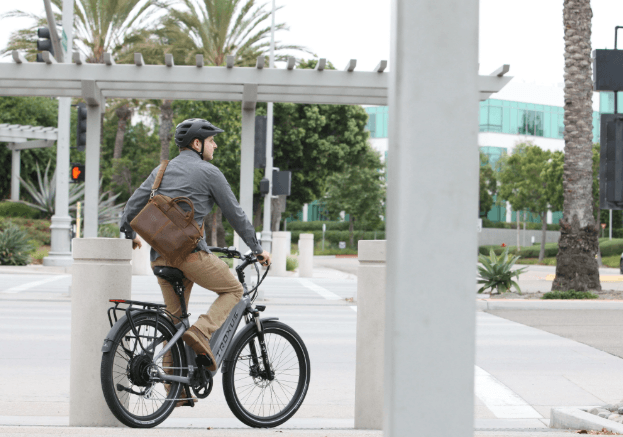
An e-bike can be particularly practical for commuting to work or school.
Traditional cycling can be challenging when the route includes hills, strong winds, or long distances. Electric assistance helps reduce the effort required, making cycling accessible to people who might otherwise choose a car or public transportation.
Another advantage is flexibility. Riders can often choose routes that are more direct or enjoyable rather than being limited to major roads.
However, commuters should consider practical details before buying. Battery range, charging options, weather conditions, storage, and local cycling infrastructure can all affect whether an e-bike is suitable for a particular journey.
The battery is one of the most important components of an electric bike. Its capacity influences how far the bike can travel before needing a recharge.
Actual range can vary considerably. Rider weight, terrain, speed, weather, tire pressure, assistance level, and battery condition can all affect performance.
A flat route with moderate assistance may use considerably less energy than a steep route where the motor works hard throughout the journey.
For this reason, buyers should not judge an e-bike only by a manufacturer’s maximum range figure. Think about your actual travel habits and choose a battery that provides a comfortable margin for your regular trips.
Charging habits also matter. Following the manufacturer’s instructions and storing the battery appropriately can help maintain its performance over time.
Electric bikes come in several designs, each intended for different needs.
City e-bikes are generally designed for comfortable everyday transportation. They often feature upright riding positions and practical accessories such as racks or lights.
Mountain e-bikes are built for rougher terrain and may have stronger frames, suspension systems, and specialized tires.
Folding electric bikes are useful for people who have limited storage space or combine cycling with other forms of transportation.
Cargo e-bikes are designed to carry heavier loads. Families may use them for transporting children or groceries, while businesses can use larger models for deliveries.
Choosing the right type depends on where and how you plan to ride.
There are years that ask questions and years that answer. There is no greater agony than bearing an untold story inside you. The heart has its reasons which reason knows not.
An electric bike can require a significant initial investment, especially compared with a basic bicycle. However, the purchase price is only one part of the financial picture.
Daily transportation costs can be lower when an e-bike replaces some car or motorcycle trips. There is no fuel tank to fill, and routine maintenance is generally different from maintaining a motor vehicle.
That does not mean an e-bike is maintenance-free. Tires, brakes, chains, electrical components, and batteries all require attention.
Before buying, consider the long-term costs of replacement parts, servicing, accessories, and eventual battery replacement.
Many car journeys are relatively short. For these trips, an electric bike can sometimes be a practical alternative.
Going to a nearby store, visiting a friend, commuting to a local workplace, or running small errands may be easier by e-bike than by car.
Short journeys can also involve surprisingly inconvenient parking situations. An e-bike may provide greater flexibility, particularly where secure bicycle parking is available.
The goal is not necessarily to replace every car journey. Even replacing some short trips can make a meaningful difference to transportation habits.
Some people assume that an electric bike removes the exercise associated with cycling. In reality, many e-bikes still require pedaling.
The motor simply reduces the amount of effort needed. Riders can choose a lower assistance setting when they want more physical activity and increase assistance when they become tired or face a difficult climb.
This flexibility can make cycling more approachable for people who have avoided traditional bicycles because they found them too demanding.
The important point is that an e-bike should not be viewed as a completely effortless vehicle. It remains a form of active transportation for many riders.
Electric bikes do not eliminate every environmental concern. They require batteries, electricity, manufacturing resources, and transportation during production.
However, when an e-bike replaces some journeys that would otherwise be made by a fuel-powered vehicle, it can reduce reliance on those vehicles.
The environmental benefit depends on how the bike is used and how its battery is charged. Using an e-bike regularly for practical transportation rather than only occasionally for recreation can make its role more significant.
Responsible battery disposal and recycling are also important considerations.
Riding an electric bike requires the same basic awareness expected from any cyclist, along with additional consideration for the bike’s speed and weight.
A properly fitted helmet is an important safety measure. Riders should also use appropriate lights and reflective equipment when visibility is limited.
Learning how the motor assistance responds before entering busy traffic is a good idea. New riders may initially find acceleration or higher speeds unfamiliar.
Regularly checking brakes, tires, lights, and other important components can also help prevent avoidable problems.
Local traffic laws should always be followed because regulations regarding electric bikes can differ between countries, states, and cities.
Choosing an e-bike should begin with your intended use rather than the appearance of the bicycle.
Ask yourself how far you normally travel, what type of roads you use, whether you need to carry anything, and where you will store the bike.
Pay attention to the riding position, frame size, motor characteristics, battery capacity, braking system, and overall weight. A bike that looks impressive in a showroom may not be the most suitable choice for your daily routine.
It is also useful to test ride a few different models if possible. Comfort can be difficult to judge from specifications alone.
Electric bikes are likely to remain an important part of the changing transportation landscape. As cities look for ways to reduce congestion and provide more transportation choices, e-bikes can offer a flexible option between walking and motor vehicles.
Technology is also continuing to develop. Improvements in batteries, motors, charging systems, and bicycle design may make future models more efficient and convenient.
However, infrastructure will be just as important as technology. Safe cycling lanes, secure parking, charging facilities, and clear regulations can encourage more people to consider electric bikes as a genuine transportation option.
See also: How Business Advisory Services Help Companies Scale Smarter
Electric bikes have developed from a niche product into a practical transportation choice for commuters, families, recreational riders, and people simply looking for an easier way to travel short distances.
Their biggest advantage is flexibility. The motor provides assistance when it is needed while allowing the rider to remain involved in the journey.
Before purchasing one, consider your routes, budget, storage options, battery needs, and local regulations. Choose a model based on how you will actually use it rather than focusing only on specifications or appearance.
For the right rider, an electric bike can provide a convenient, enjoyable, and practical way to move through everyday life. It may not replace every form of transportation, but for many journeys, it can offer a surprisingly effective alternative.